A food conveyor skirt must control spillage without creating a hygiene gap, damaging the belt, or shedding material into the product zone. By the end, you will be able to compare local suppliers, specify a suitable compound and sealing arrangement, evaluate belt skirting price in Gujarat, and prepare an RFQ that produces comparable quotations.
Key takeaways
- Request formulation, colourant, plasticizer and batch-traceability records.
- Match skirting material to powders, moisture, product temperature and caustic washdown.
- Set the skirt close enough to contain product without rubbing the belt.
- Compare samples, drawings, lead times, testing documents and total installed cost.
What makes conveyor belt skirting suitable for food processing?
A “food-grade” label does not prove that food conveyor belt skirting in Ankleshwar suits your process. Confirm the exact polymer formulation, colourant, plasticizer package, batch traceability, and intended food-contact conditions, including product type, temperature, contact time and cleaning chemicals.
| Item | What you receive | What to verify |
|---|---|---|
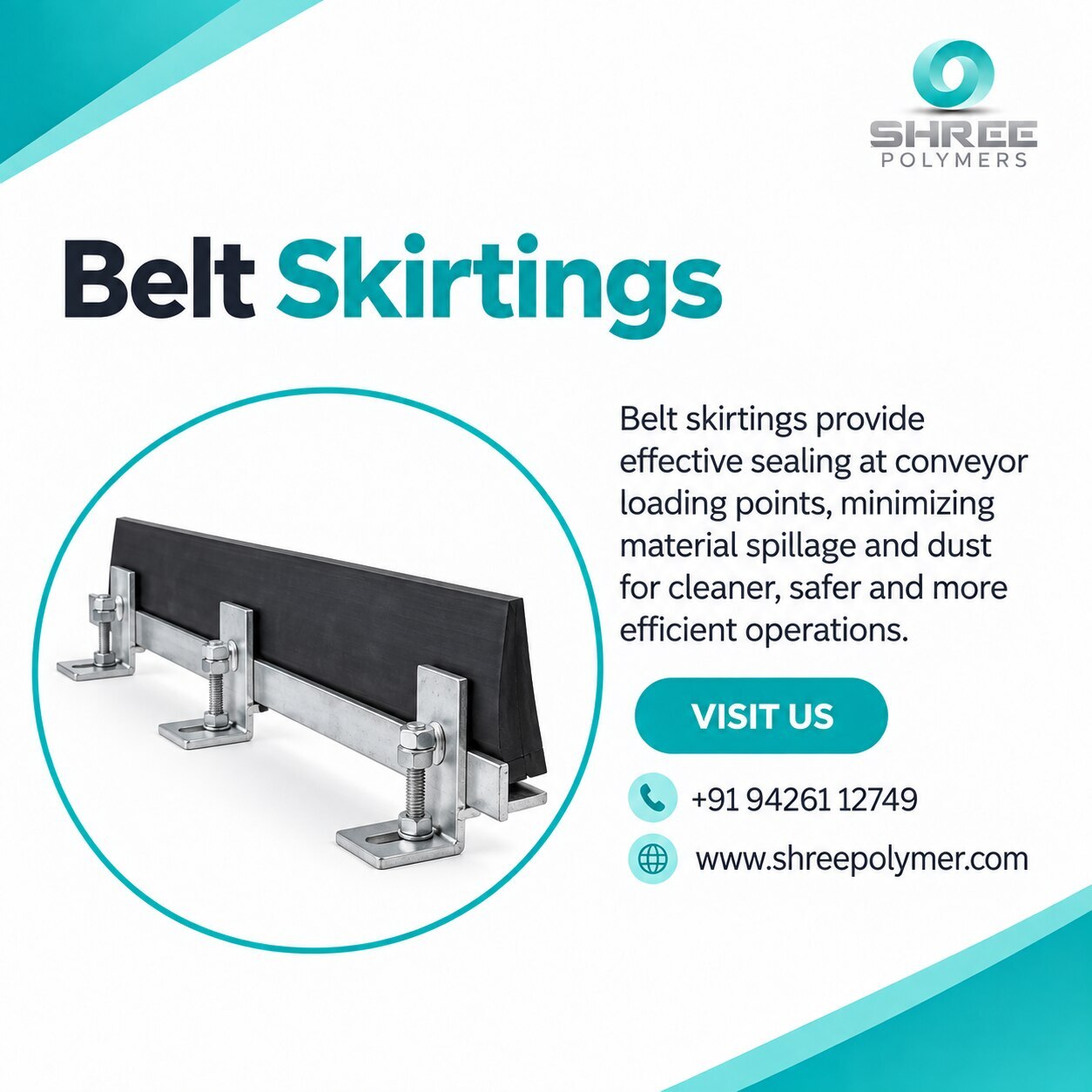
| Replacement skirt strip | Rubber or polyurethane strip only | Compound, dimensions, batch number and whether it sits inside the product zone, outside it, or works only as a dust seal |
| Complete transfer-point sealing package | Strip plus clamp bars, backing plates, wear liners, fasteners, chute sealing and dust-control parts | Food-contact status and cleanability of every exposed component |
| Installed conveyor assembly | The complete fitted sealing arrangement | Belt tracking, pulley clearance, joints, corners, cavities and adjacent surfaces |
For repeated-use rubber articles, request a declaration or test evidence tied to the supplied compound under 21 CFR 177.2600, including extractives limits and test conditions. For EU-market applications, ask how the supplied article meets Regulation (EC) No. 1935/2004.
A material declaration does not certify the complete installed conveyor; clamps, adhesives, backing strips and liners need separate assessment when product can reach them.
Specify a mounting design without exposed horizontal ledges, open clamp cavities, rough cut edges or absorbent backing materials. Those features retain food and resist washdown. Require documented access for cleaning and allergen changeovers, not merely a claim of FDA compliance.
Which skirting material fits powders, wet products and caustic washdown?
Dry powder, wet residue and caustic washdown demand different answers. For food conveyor belt skirting in ankleshwar, select the material from the product, belt cover and cleaning cycle together—not from a “food-grade” label.
| Option | Service fit | Main limitation |
|---|---|---|
| Rubber skirting | Economical for dry powders and moderate sealing | Ordinary grades wear faster against abrasive ingredients and may swell in chemicals |
| Polyurethane skirting | Strong abrasion resistance for sand, sugar, grains and other abrasive products | Formulation must be checked for hot water, caustic soda, acids, oils and food contact |
| UHMWPE liner | Low friction and good resistance to sticky product build-up | Rigid liner can damage a misaligned belt or leave gaps over uneven surfaces |
| Brush seal | Fine powders, light-duty dust control and irregular surfaces | Bristles retain residue and wear quickly under impact or aggressive washdown |
| Air seal | Dust containment without continuous belt contact | Needs clean, reliable air supply and careful control of pressure |
| Fixed clamp-mounted skirt | Hygienic, adjustable retention of a selected strip or liner | Poorly sealed clamps create crevices and make cleaning difficult |
Match chemical concentration, wash temperature and exposure time to the exact compound formulation. Request a datasheet stating hardness and test method, thickness tolerance, density, abrasion result, operating-temperature range, coefficient of friction where available, chemical-resistance guidance, allowable belt pressure and belt-cover compatibility.
A hard strip can score the belt; a soft strip can curl into product, fold at impact points or wear rapidly. Check the seal during cleaning and production, not only at installation.
How should you size and set a skirt at the loading zone?
Size the skirt from the loading event, not from belt width alone. Record belt width and speed, skirt-board length, trough angle, transfer-point geometry, belt sag, material bulk density, lump size and expected impact before selecting strip width and thickness.
- Check idler spacing, transition length, belt tracking and chute alignment. Excessive sag between idlers will cause leakage even with a wider or thicker strip.
- Set the skirt for light, controlled contact with the loaded belt. Heavy clamping increases drag, heat, edge wear and power demand; insufficient contact releases fines and wash water.
- Use adjustable clamp bars and backing plates with sealed, cleanable joints. Specify overlap at strip connections, closed corners and clearance from every pulley.
- Keep the skirt-board length inside the transfer zone and suit the material’s impact energy. Large, dense lumps need stronger support and a controlled loading trajectory, not simply harder rubber.
- Define adjustment frequency, such as after commissioning, after belt-tracking events and at each scheduled washdown inspection. Record the setting and replacement limit.
- Treat “self-adjusting guide” as a feature to prove. Run the actual belt empty and loaded, then confirm that it follows belt movement without cutting the edge, trapping product or rubbing a pulley.
Inspect for mistracking, trapped product behind the strip and friction heating at the seal line. A buyer searching buy conveyor belt skirting in ankleshwar should request the complete clamp, corner-seal and wear-control arrangement, not compare strip price alone.
How do you compare belt skirting suppliers near Ankleshwar?
Ask every belt skirting suppliers near Ankleshwar to quote the same transfer point, then score technical fit and response speed separately from price. Distinguish a local manufacturer that can measure, fabricate and replace parts from a reseller that only forwards standard strip.
| Supplier capability | What to verify | Why it matters |
|---|---|---|
| Local manufacturing | Site measurement, chute inspection, fabrication and installation support | Reveals whether the supplier can correct misalignment rather than sell thicker strip |
| Resale supply | Brand, source, stock location and technical responsibility | A low price may leave you dependent on an outside service team |
| Service response | Lead time, emergency replacement, Ankleshwar GIDC coverage, nearby industrial-area visits and spare-strip stock | A failed seal can stop production and increase contamination risk |
belt skirting price in Gujarat is not comparable until each quotation states width, thickness, length, compound, hardness, colour, compliance documents, cutting charges, minimum order quantity, clamps or fabrication, freight to Ankleshwar and GST treatment. Confirm whether the price covers strip only or a complete bill of materials.
Send one RFQ, with photographs and chute dimensions, to every bidder. Request:
- Samples, dimensional drawings and a compatibility list
- Thickness tolerance, hardness test method, density, abrasion data, temperature range and chemical-resistance guidance
- Batch records and food-contact documentation for the supplied compound
- Installation method, adjustment limits and after-sales contact
Consider Shree Polymers alongside other local suppliers when it provides a site-specific assessment, material documentation and installation support for the actual transfer point. Choose the highest technical and service score, not the lowest strip price.
Related product
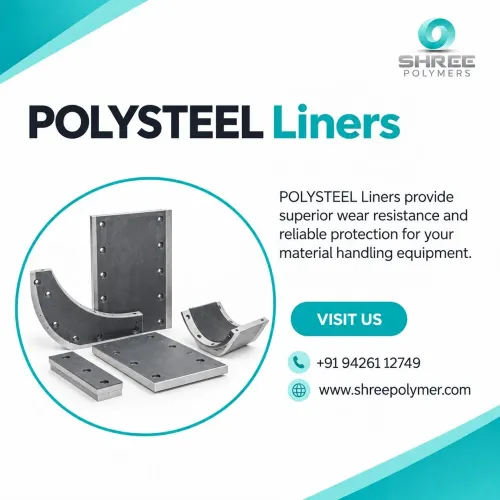
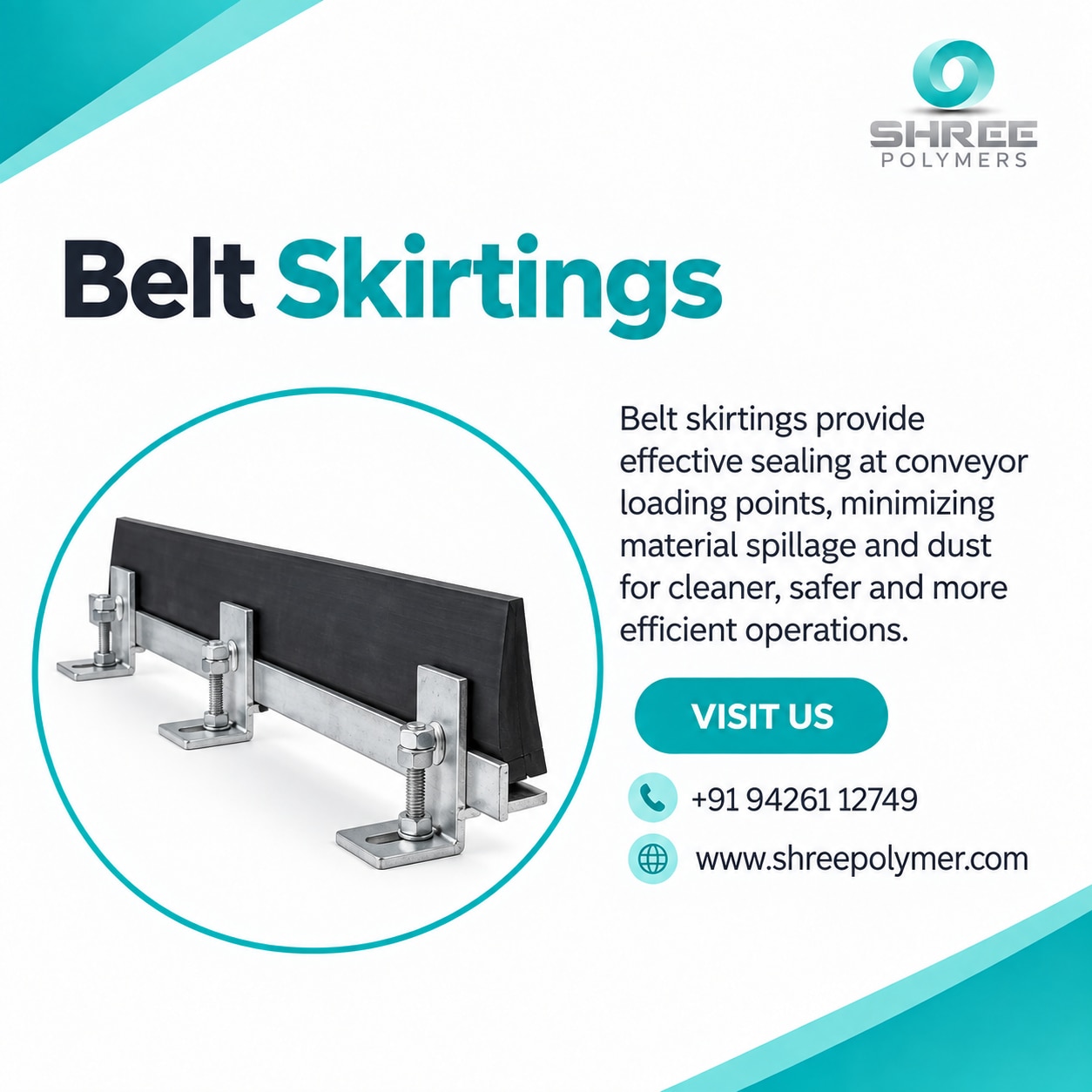 | Material Handling Belt Skirtings POLYSTEEL belt skirtings are designed for conveyor loading stations where bulk material can remain agitated and cause spillage. |
What commissioning and inspection checks protect the belt and product?
Make acceptance part of the installation order, not a decision made after the first leakage complaint. If you plan to buy conveyor belt skirting in ankleshwar, require the supplier to record these checks after installation and when loading begins:
1. Before startup, verify chute alignment, clamp tightness, joint overlap, sealed corners, belt tracking, idler support and pulley clearance. Remove exposed rough edges, projecting fasteners and loose hardware.
2. Run the conveyor empty. Confirm continuous light contact between skirt and belt, without heavy pressure, belt-edge cutting, rubbing marks or heat at the seal line.
3. Run product through the transfer point. Check for spillage, curled strip edges and material trapped behind the skirt. Stop the conveyor if the belt contacts a pulley or the skirt becomes a wear-particle source.
4. Inspect after the first shift, after every belt-tracking event and at intervals tied to production and washdown frequency. High-throughput lines and frequent caustic cleaning need shorter intervals.
5. During allergen changeovers, remove or clean every product-retaining surface, including clamps, backing strips and adjacent liners. Do not approve a design with inaccessible ledges or cavities.
6. Replace the skirt after loss of contact, visible cracking, permanent curling, embedded fragments, unacceptable wear depth or failed chemical-cleaning performance.
Record compound, hardness, dimensions, batch number and replacement date. Those details make the next purchase traceable and expose an incorrect material substitution.
Frequently asked questions
What makes conveyor belt skirting suitable for food processing?
Check the exact polymer formulation, colourant, plasticizer package, batch traceability and food-contact conditions. Confirm suitability for your product, temperature, contact time and cleaning chemicals rather than relying on a food-grade label.
Which skirting material fits powders, wet products and caustic washdown?
Choose material against the process exposure: powder containment, wet-product contact, operating temperature and caustic cleaning chemicals. Ask suppliers for the formulation and chemical-compatibility evidence for your washdown conditions.
How should you size and set a skirt at the loading zone?
Size the skirt to contain the material stream and support the loading-zone layout. Set it close enough to prevent spillage while avoiding continuous belt rubbing, excessive drag and a trapped product path.
How do you compare belt skirting suppliers near Ankleshwar?
Compare formulation records, food-contact documentation, samples, dimensions, batch traceability, delivery time, installation support and the complete installed price—not only the quoted price per metre.
What commissioning and inspection checks protect the belt and product?
Inspect the skirt-to-belt gap, alignment, fasteners, joints, product traps and belt tracking before production. Recheck after washdown and during operation for rubbing, leakage, loose material or contamination.
Keywords