A flexible gravity conveyor can shorten temporary transfers between packaging stations, but its suitability depends on load geometry, roller support, hygiene controls, and the level of flow control your line needs. By the end, you will be able to specify the conveyor’s dimensions, test its real operating limits, compare alternatives, and question a local supplier about installation and service.
Key takeaways
- Define load, width, height, extension length, and curve requirements before comparing conveyors.
- Use stainless steel or cleanable surfaces where the conveyor enters controlled pharmaceutical areas.
- Choose gravity flow only when slope, operator handling, and package stability suit the line.
- Ask suppliers for drawings, load ratings, safety details, FAT records, and local service coverage.
Specify the expandable conveyor before comparing models
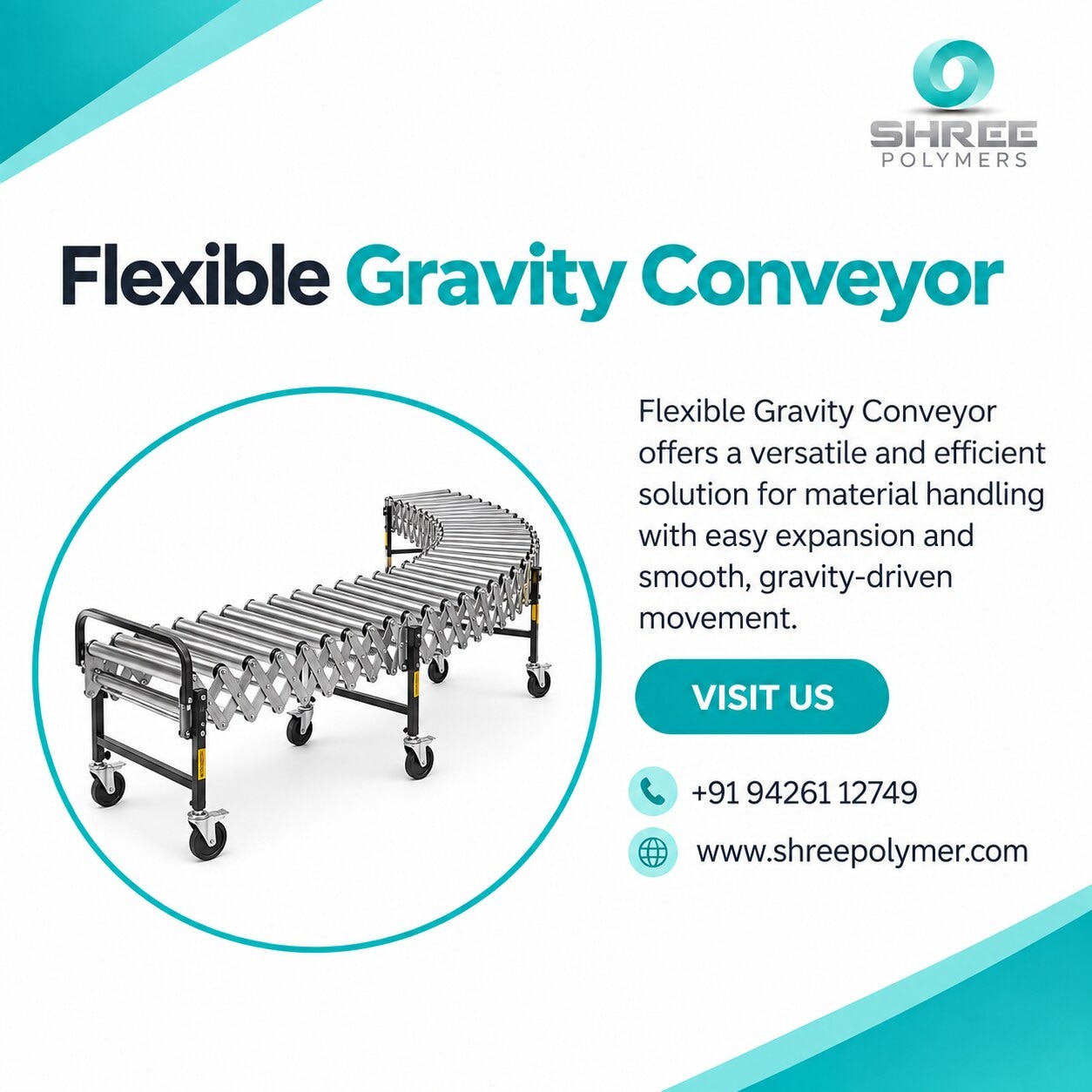
Specify a pharmaceutical gravity conveyor as a deployable section, not a complete conveying system. A flexible conveyor for material handling uses an expandable or telescoping frame, gravity rollers or skate wheels, caster wheels, adjustable height and, where required, curved sections. Define the section’s limits before comparing models.
| Specification | Request | Why it matters |
|---|---|---|
| Collapsed and extended length | Both dimensions | Shows usable travel and footprint |
| Usable width and working-height range | Clear load width and adjustment limits | Prevents fit and ergonomic failures |
| Minimum curve radius and incline limit | Manufacturer’s figures | Confirms route feasibility |
| Load rating at full extension | Uniformly distributed and concentrated loads | Reveals structural limits under real loading |
| Rating basis | Whole section, each roller, or each wheel | Prevents misleading capacity comparisons |
Check the smallest carton or tote first. Select roller pitch so at least three rollers support every unit load at all times, then confirm the rating at full extension.
A heavier carton will not necessarily flow better: a warped, soft, uneven or damaged bottom can stop or yaw it, because package-bottom friction and slope control travel as much as weight.
Confirm that the design includes:
- Lockable casters, side guides, end stops, brakes and guarded telescoping joints
- A controlled-transfer arrangement for every incline
- A drawing showing the expanded envelope, turning radius, transfer height and pinch points
Require a trial with the smallest and largest actual loads before approval. Ask the supplier to identify every transfer gap and the safe operating slope; nominal capacity alone does not prove reliable movement.
Match the conveyor to the load and pharmaceutical area
Start with the load, not the conveyor. Decide whether the pharmaceutical gravity conveyor will carry sealed secondary-packaging cartons, shipper cases, rigid totes, drums, or anything near open product or primary packaging. Flexible gravity equipment is usually strongest in dry secondary-packaging areas, where stable-bottom cartons and totes can roll without exact spacing.
Full-width rollers give weak or uneven carton bottoms more continuous support. Skate wheels suit rigid-bottom loads and curved layouts, but their support is less predictable for small, flexible, or damaged packages.
Classify the installation before selecting materials:
- Dry secondary packaging: painted steel can fit, but protect it from frequent wet cleaning and aggressive chemicals.
- Washdown packaging: specify corrosion-resistant construction, drainage, compatible seals, and cleaning-chemical resistance.
- Controlled non-classified production: define lubricant, bearing, polymer, and residue controls.
- Higher-grade cleanroom application: require cleanroom-compatible surfaces, accessible joints, controlled lubricants, and no residue-trapping crevices.
Tell the flexible gravity conveyor supplier to state the stainless steel grade, surface finish, weld quality, fastener material, bearing and lubricant controls, and food-contact polymers where relevant. Stainless steel alone does not make equipment hygienic; poor welds, exposed bearings, or incompatible lubricants can still create contamination and cleaning failures.
Keep standard warehouse equipment away from exposed product unless the plant’s contamination-control and cleanability review approves it. Request aluminium or cleanroom-compatible surfaces only when their joints, bearings, coatings, and cleaning method also meet the area’s requirements.
Choose gravity only when its flow limits fit the line
Choose gravity only if the line’s required cartons per hour, queue length, spacing, and stopping frequency fit operator-driven flow. A flexible conveyor for material handling saves fixed floor space and power, and operators can reposition it between packaging lines, but they must push or pull cartons and reset the section.
| Option | Throughput and control | Footprint, labour, and maintenance |
|---|---|---|
| Flexible gravity | Low to moderate flow; no reliable spacing, dwell, or accumulation control | Small stored footprint; manual handling and repositioning; simple but frequent alignment checks |
| Fixed gravity rollers | Steadier flow on a permanent route; limited control | Larger fixed footprint; less repositioning labour; straightforward maintenance |
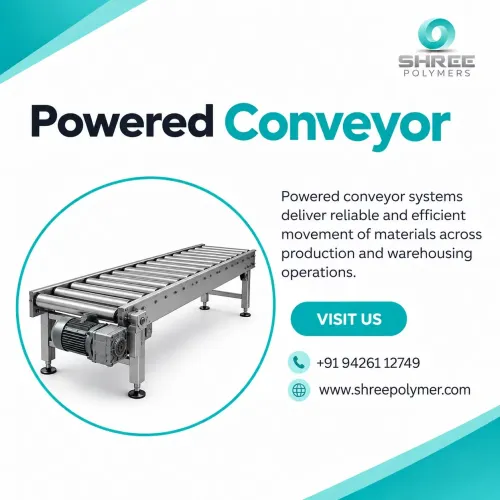
| Powered rollers | High traffic, heavier loads, metering, and controlled accumulation | Fixed footprint; lower pushing effort; motors, sensors, and drives add maintenance |
| Belt conveyor | Stable handling for small, soft-bottom, or unstable packages | Fixed route; continuous powered operation; belt tracking and cleaning require attention |
| Skate-wheel conveyor | Curves easily for rigid-bottom cartons and totes; variable support | Flexible layout; manual pushing; wheels wear faster with poor bottoms |
Reject flexible gravity for fragile, unstable, liquid-filled, very small, or easily tipped loads, steep rises, and zones needing controlled accumulation. Gravity cannot guarantee dwell time, serialization-camera position, checkweigher stability, reject timing, or zero-pressure accumulation without side guides, sensors, powered metering, or a powered section.
Test the real minimum and maximum carton weights, dimensions, bottom condition, slope, travel time, and transfer behaviour. Do not approve a gravity conveyor system in Gujarat from an advertised capacity or an empty demonstration carton.
Build hygiene, safety, and acceptance checks into the purchase
Treat a pharmaceutical gravity conveyor as part of the line layout and equipment-cleaning system, not as a length of movable track. FDA 21 CFR 211.63 requires equipment to be appropriately designed, adequately sized, and suitably located for operation, cleaning, and maintenance; 21 CFR 211.67 requires cleaning and maintenance that prevent contamination or malfunction.
1. Inspect telescoping joints, exposed crevices, undersides, welds, fasteners, enclosed bearings, lubricants, and surfaces that can retain powder or cleaning residue. Confirm washdown compatibility, corrosion resistance, drainage, and access for roller replacement.
2. Define the cleaning and safety acceptance checks before purchase. Test caster-brake performance, frame stability when extended, joint clearance, end-stop retention, wheel or roller entrapment, operator pinch points, and safe movement around packaging machines. Reject designs that leave bearings or residue-trapping joints inaccessible.
3. Run the conveyor at site with production cartons or totes, not an empty demonstration carton. For a gravity conveyor system in Gujarat, record the slope, minimum and maximum load, carton dimensions and bottom condition, travel time, spacing, queue length, stopping frequency, jams, transfer failures, and performance after cleaning.
4. Request written cleaning instructions, preventive-maintenance intervals, spare roller or wheel details, lubricant specifications, and warranty exclusions. Keep the records with the equipment file and approve routine use only after the trial passes.
A cleanable pharmaceutical gravity conveyor must remain stable, drainable, inspectable, and serviceable after repeated movement and cleaning. A design that conveys well but traps residue or creates an unguarded pinch point is not fit for the line.
Question the Ankleshwar supplier about design and local support
A flexible gravity conveyor supplier may resell a warehouse unit; a flexible gravity conveyor manufacturer in Ankleshwar should show what it designs, fabricates, stocks, installs, validates, and services locally.
For Shree Polymers or another provider, send load drawings, sample cartons or totes, dimensions, throughput per hour, shift pattern, operator height, route, incline points, and area classification.
| Provider | Verify before comparing |
|---|---|
| Supplier | Manufacturer, origin, stocked spares, installer, local service response |
| Manufacturer | Design ownership, fabrication location, validation support, modification responsibility |
| Both | Warranty exclusions, FAT or site-trial method, replacement-roller cost |
Request an expanded and retracted drawing, load-versus-length table for distributed and concentrated loads, roller pitch, minimum curve radius, height adjustment, material and finish schedule, guarding, and written exclusions. Ask who pays for repositioning, manual pushing, modifications, and replacement rollers.
- For a gravity conveyor system in Gujarat, confirm site access, floor flatness and condition, ambient heat, humidity, cleaning chemicals, available power, delivery route, installation boundaries, spare-part stock, and service location.
- Run the trial with production loads, recording slope, carton weights, dimensions, bottom condition, travel time, stopping frequency, transfer jams, and performance after cleaning or chemical exposure.
Compare usable capacity and maintenance effort, not conveyor length alone. Require the plant-specific hygiene and acceptance review in writing; stainless steel or a standard warehouse design does not prove pharmaceutical suitability.
Related product
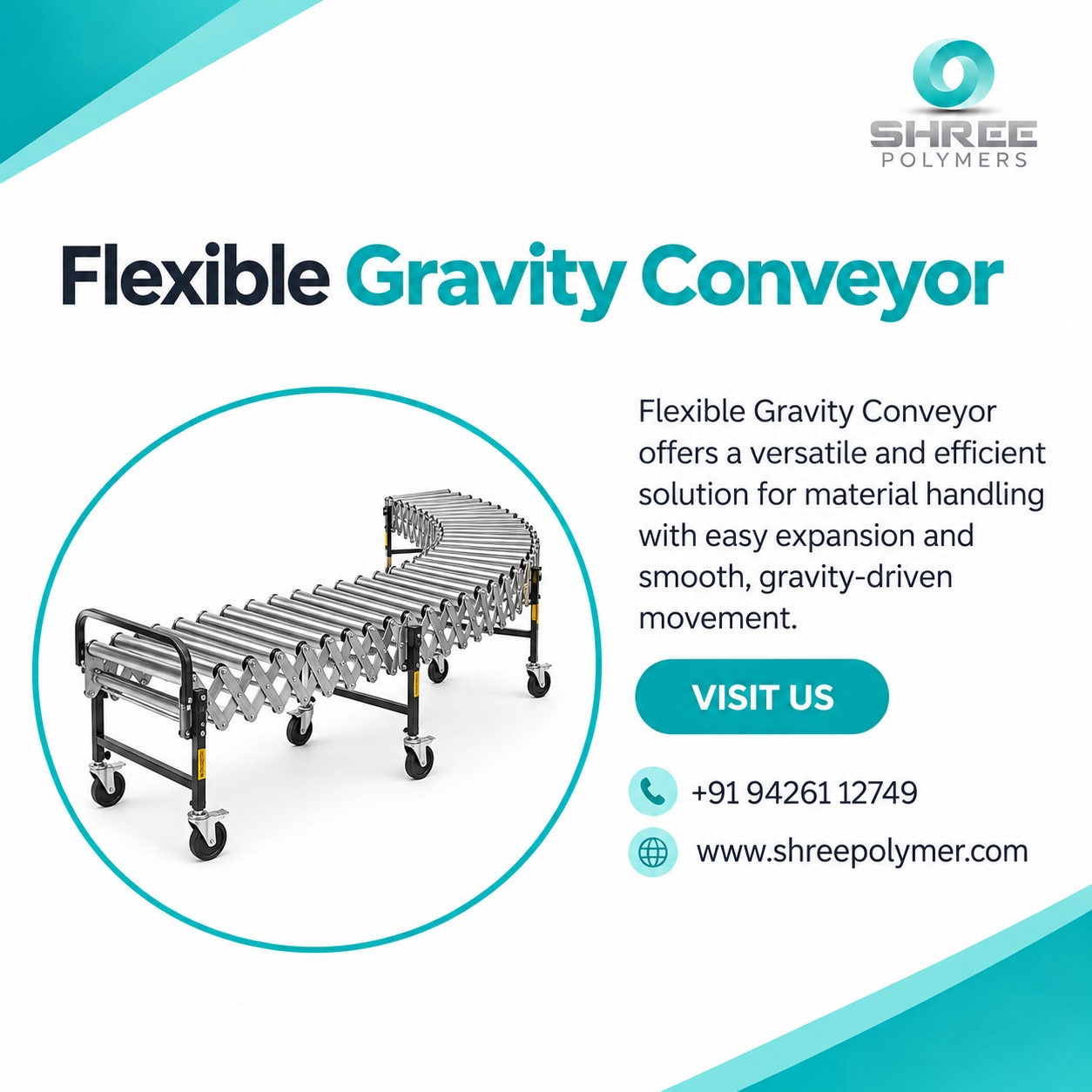 | Conveyors and Automation Flexible Gravity Conveyor POLYSTEEL flexible gravity conveyors are listed within the conveyor systems range for material movement and handling applications. |
Frequently asked questions
What should you specify before comparing flexible gravity conveyor models?
Specify the deployed and retracted lengths, conveyor width, adjustable height range, roller or skate-wheel type, caster arrangement, curve requirements, load dimensions, load weight, and required throughput.
Which flexible conveyor features suit pharmaceutical areas?
Match construction to the area classification. Request cleanable surfaces, suitable stainless steel contact parts, protected bearings, accessible inspection points, and a design that avoids dirt traps where hygiene controls are strict.
When is a gravity conveyor the wrong choice?
Do not choose gravity when packages need powered accumulation, controlled spacing, elevation changes, precise indexing, or stable movement across level sections without an operator pushing the load.
What should you ask an Ankleshwar conveyor supplier before purchasing?
Ask for a dimensioned layout, load rating, materials list, surface finish, safety provisions, testing and acceptance documents, installation scope, spare-parts availability, and response arrangements for local service.
Keywords