A motor rating alone cannot tell you whether a vibratory conveyor will move your material reliably. You will be able to define the operating principle, calculate a realistic capacity, select materials and controls, compare conveyor types, and request a specification that suits an Ankleshwar plant.
Key takeaways
- Match trough width and depth to product load, flow rate and clearance needs.
- Calculate usable capacity from trough volume, fill level, bulk density and conveying speed.
- Specify stainless steel grade, surface finish, controls, guards and site conditions.
- Choose vibration for gentle, sanitary conveying—not sticky, fragile or highly elevated loads.
How vibration moves material through the trough
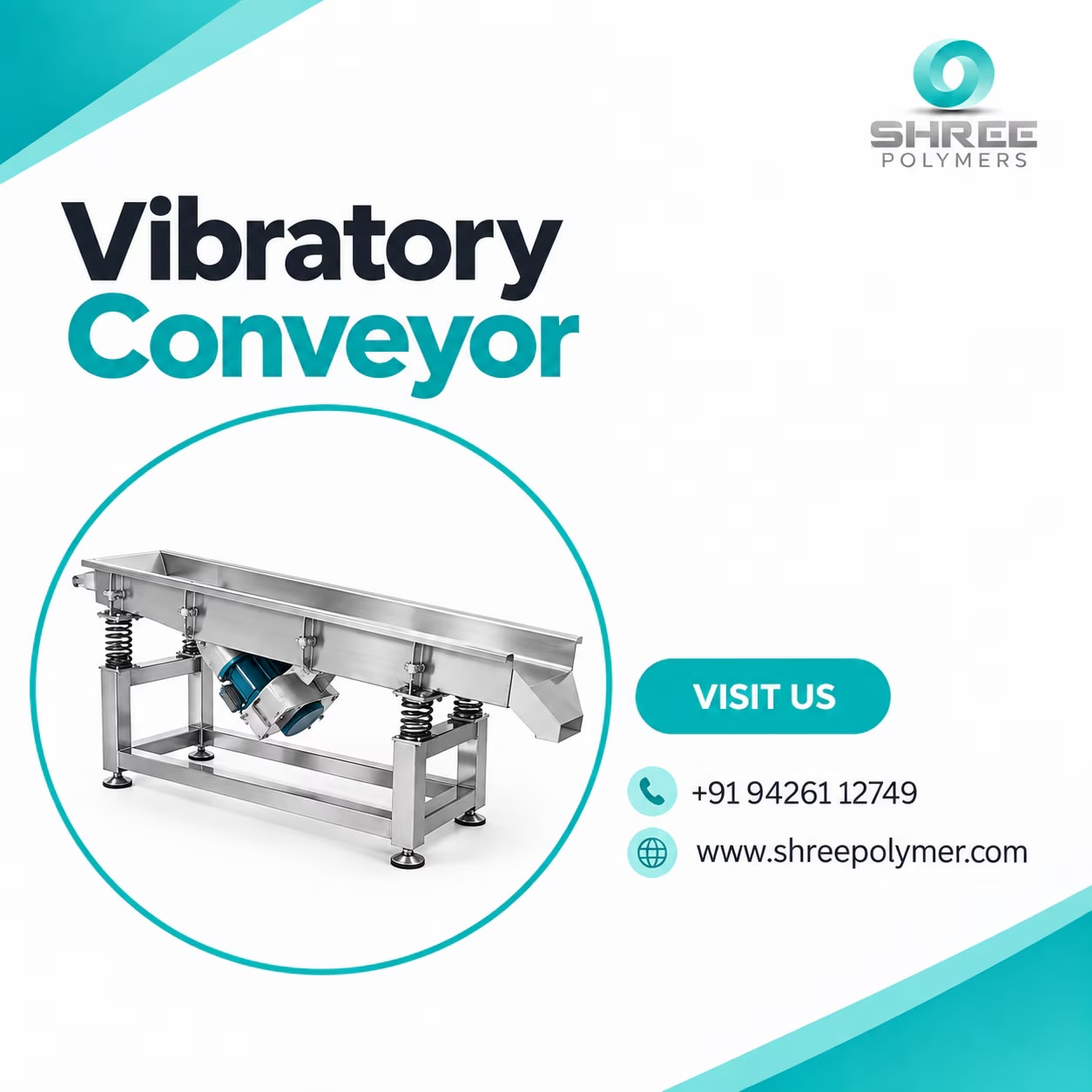
A vibratory conveyor moves material by giving its trough a repeated forward-and-upward throw, followed by a backward-and-downward return. At the selected frequency and amplitude, the product lifts, slips, or rolls during each cycle; friction and the directional motion create net travel toward the discharge.
Higher amplitude increases the throw, while frequency affects conveying speed, product agitation, and breakage risk.
A motor rating alone cannot predict capacity. Industrial vibratory conveyor specifications must describe:
- Trough length, usable width, depth, overall height, conveying distance, and allowable inclination
- Design capacity in kg/h or t/h, bulk-density range, loading or fill factor, conveying speed, frequency, and amplitude
- Particle-size distribution, maximum lump size, friability, abrasiveness, moisture, stickiness, product temperature, and required residence time
- Drive type, motor rating, control range, discharge arrangement, and whether the machine conveys continuously or meters feed
- Hopper interface, surge volume, feeder response, downstream interlocks, and the required discharge rate when feeding a packaging machine
Treat the support system as part of the conveyor, not as an installation afterthought. Require support-point locations, spring or hanger type, static and dynamic reactions, allowable slope, foundation or platform loads, and isolation requirements; otherwise a trough proven on a test stand can shake a lightweight structure.
State wetted materials, bearing protection, cable glands, and cleaning exposure when specifying service in a chemical or humid plant.
How to select trough size and calculate usable capacity
Choose the trough from the material envelope and required mass flow, not from the motor rating. Record minimum and maximum bulk density, particle-size distribution, lump size, friability, abrasiveness, temperature, moisture, cohesiveness, conveying distance, incline and required residence time.
For preliminary vibratory conveyor size selection, use:
Mass flow = bulk density × loaded cross-sectional area × conveying speed × fill factor
Use the usable trough width and the actual loaded bed depth, not the full trough depth. For example, 600 kg/m³ × 0.40 m × 0.10 m × 0.20 m/s × 0.60 × 3,600 equals about 10,370 kg/h. The fill factor prevents an empty-looking calculation from claiming that the trough stays full continuously.
Set these inputs before requesting industrial vibratory conveyor specifications:
- Select trough width and depth around the largest lump, required bed depth and cleanability.
- Check capacity at minimum density, because the same mass flow occupies more volume.
- Allow for reduced conveying speed on an incline, sticky product or fragile product.
- Separate steady conveying from controlled feeding; packaging equipment needs response time, surge volume and interlocks.
| Requirement | Continuous conveying | Controlled feeding |
|---|---|---|
| Capacity basis | Stable mass flow in kg/h or t/h | Setpoint, response time and repeatability |
| Trough sizing | Bed area and conveying speed | Bed area plus surge and discharge control |
| Specification focus | Length, width, depth and density range | Hopper interface, feeder control and downstream interlock |
Confirm the calculation with a representative material trial. Specify discharge arrangement, product temperature and moisture alongside the rated capacity.
Materials, finishes, controls and site conditions to specify
A suitable machine starts with the product’s contact surfaces, not its motor rating. Specify trough length, usable width and depth, capacity in kg/h or t/h, bulk-density range, conveying distance, inclination, product temperature, maximum lump size, moisture, stickiness and discharge arrangement.
- Select stainless steel grade against the actual chemicals, chlorides, temperature and cleaning agents. “SS” alone is not a material specification.
- State the required surface finish, weld treatment and material certificates where product contact or chemical service demands them.
- Protect bearings from dust, washdown and corrosive vapour with the appropriate seals, covers and cable glands.
- Reserve access for removing the trough, inspecting springs and replacing drive parts; a machine that cannot be serviced in place will consume production time.
Drive selection changes the control specification. An electromagnetic unit normally needs a dedicated rectifier/controller for stroke adjustment, while an unbalanced-motor unit may need a suitable variable-frequency drive. A generic VFD can give unstable operation or inadequate stroke control if the motor and drive arrangement do not match.
| Construction choice | Specify | Main risk if missed |
|---|---|---|
| Carbon steel | Coating system, corrosion allowance and environment | Rust under damaged coating |
| Stainless steel | Grade, finish and cleaning chemicals | Pitting or product contamination |
| Food or chemical service | Weld quality, seals and certificates | Cleaning failure or chemical attack |
For Ankleshwar installations, record ambient temperature, dust, washdown method, corrosive vapours, platform loading and available headroom. Specify noise as a measured limit at a stated distance and operating condition; impact, loose guards, resonance and airborne drive noise remain after isolators are fitted.
Separate continuous conveying from controlled feeding. Require feeder response time, surge volume, hopper interface and downstream interlocks when a packaging machine needs accurate metering.
When vibration is better than another conveyor—and when it is not
Choose a vibratory conveyor when you need controlled movement of loose bulk material, heat resistance, open access, or gentle handling without belt tracking or screw contact. Choose another conveyor when the product is sticky, needs steep elevation, travels a long distance, or consists of discrete units.
| Option | Vibratory advantage or limitation | Choose it instead when |
|---|---|---|
| Belt | Handles long routes, inclines and fragile products efficiently; vibration suits shorter bulk-material runs | You need long-distance transfer, high elevation, or a continuous belt surface |
| Screw | Encloses powder and can mix or elevate material; screw contact increases shear and wear | Dust containment, steep lifting, or controlled mixing matters more than gentle conveying |
| Chain | Carries heavy loads and pallets through harsh service | The load is discrete, heavy, or requires positive engagement |
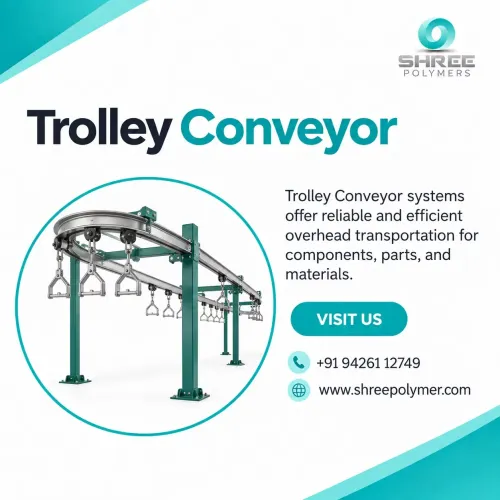
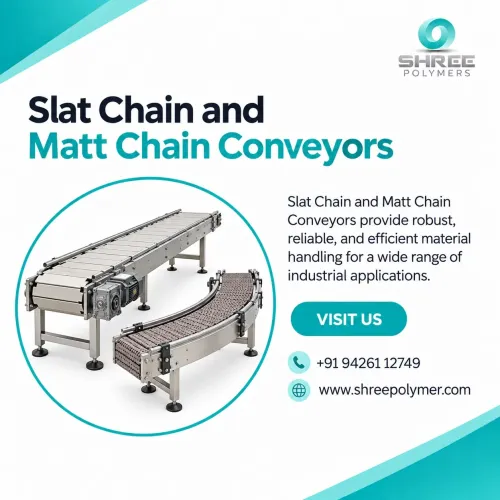
| Slat | Supports bottles, cartons and containers with stable indexing and accumulation | The product is packaged rather than free-flowing bulk material |
| Tubular disc | Provides enclosed, multi-inlet powder conveying with strong dust control | The route needs sealed transfer, vertical movement, or several pickup points |
| Gravity | Uses little power for downhill movement and simple accumulation | The route is level or uphill, or you need metered movement |
| Vibratory | Suits hot, abrasive, free-flowing solids and can combine conveying, screening or cooling | The material is cohesive, wet, sticky, or easily damaged by repeated impacts |
For vibratory conveyor size selection, compare bulk-density range, particle size, moisture, temperature and residence time, not motor rating alone. A steady conveying bed is different from a packaging feeder: specify surge volume, control response and downstream interlocks when short-term metering accuracy matters.
What to require from a vibratory conveyor manufacturer in Ankleshwar
A catalogue capacity proves only that a machine moved a test material; require evidence tied to yours. Ask a vibratory conveyor manufacturer in ankleshwar for a signed process datasheet covering trough length, usable width and depth, kg/h or t/h, bulk-density range, distance, incline, temperature, lump size, moisture, residence time and discharge arrangement.
For controlled feeding, add response time, surge volume, hopper interface and downstream interlocks.
- Request the general-arrangement drawing, machine mass, centre of gravity, anchor loads, maintenance clearances, drive and spring details, motor rating, electrical load, utilities, operating limits, recommended spares and material certificates.
- Require a witnessed trial using your minimum and maximum bulk densities, particle-size distribution, temperature and moisture. Record feed rate, discharge rate, amplitude, frequency, conveying speed, residence time, product damage and carryover; a motor test alone proves little.
- For dusty chemical service, document covers, access doors, extraction connections, gasket material, grounding, bonding, cable glands, hazardous-area classification, bearing protection and surface finish. Select stainless steel against actual chemicals, chlorides, cleaners and temperature.
| Evidence | What it proves | Reject it when |
|---|---|---|
| Process trial report | Performance with your material envelope | It uses only sand or a nominal sample |
| GA and load drawing | Fit, supports, lifting and service access | Centre of gravity or anchor loads are absent |
| Installation pack | Utilities, interlocks and site readiness | It omits floor levels, discharge height or electrical classification |
Shree Polymers can be assessed on this same evidence rather than on a listed conveyor option. A usable vibratory conveyor specifications in ankleshwar package ends with approved drawings, acceptance criteria and signed test results, not a motor size.
Related product
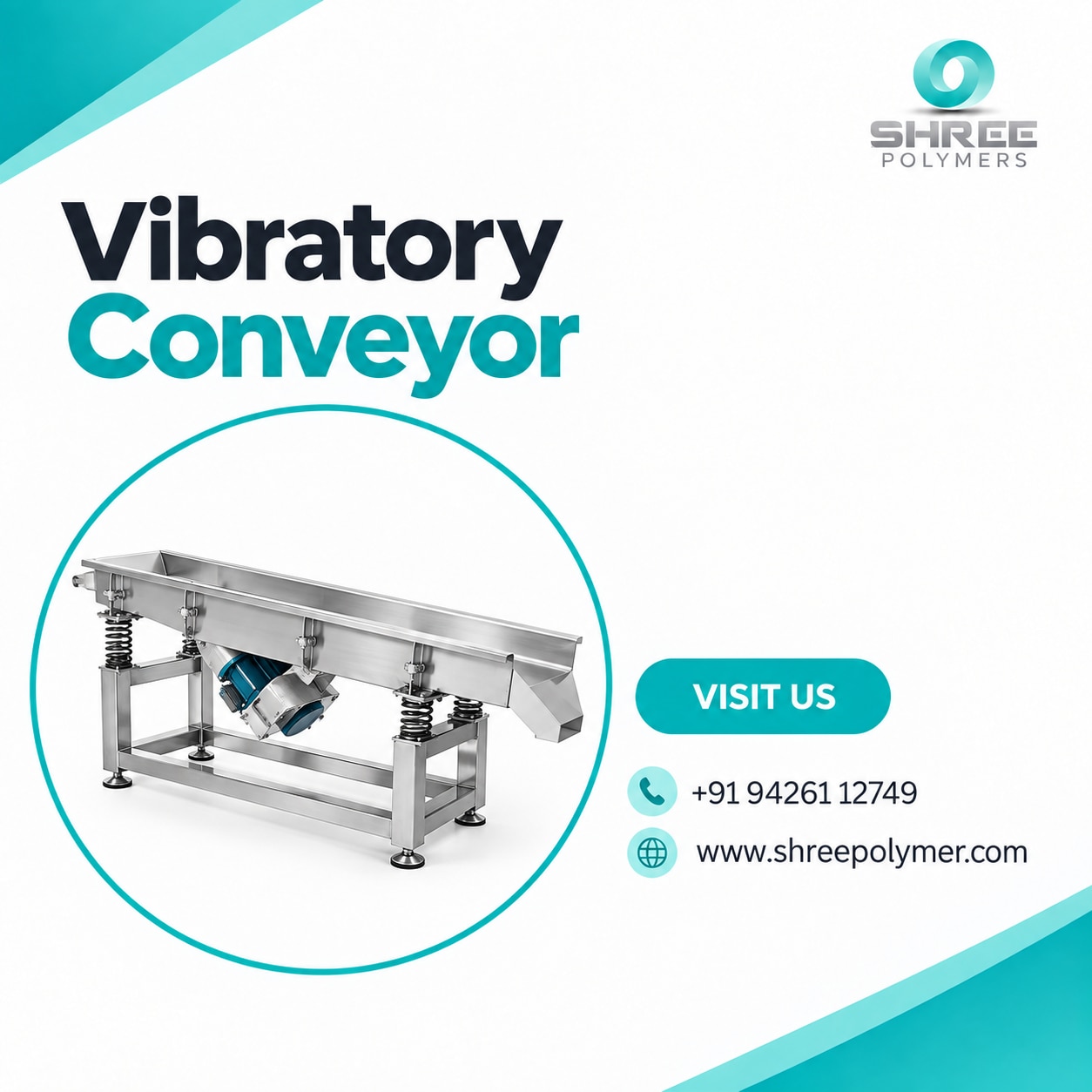 | Conveyors and Automation Vibratory Conveyor POLYSTEEL vibratory conveyors are listed as an available conveyor-system option for industrial material handling. |
Frequently asked questions
How does a vibratory conveyor move material?
The trough repeats a forward-and-upward throw followed by a backward-and-downward return. Product motion during each cycle creates net travel toward the discharge.
How do you select a vibratory conveyor size?
Choose trough width and depth from the product dimensions, required flow rate, permissible fill level and conveying speed. Calculate usable capacity from the working trough volume and bulk density.
What should industrial vibratory conveyor specifications include?
Specify trough material and finish, dimensions, frequency, amplitude, drive and controls, guards, discharge height, cleaning needs, ambient conditions and available utilities.
When is a vibratory conveyor a poor choice?
Use another conveyor when the product is sticky, easily damaged by repeated impact, difficult to fluidise, or must travel a steep elevation without intermediate equipment.
What should you ask a vibratory conveyor manufacturer in Ankleshwar to provide?
Request a dimensional drawing, duty and capacity assumptions, drive details, control philosophy, material and finish specifications, utility requirements, site-integration information and acceptance-test criteria.
Keywords